
Quick Answer
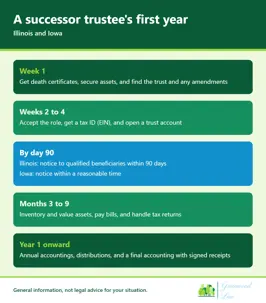
A successor trustee takes over a trust when the original trustee dies, resigns, or becomes unable to serve. The job is to follow the trust's terms, protect and manage the assets, keep beneficiaries informed, account for everything, and distribute as the trust directs. Illinois sets a 90-day deadline for the first beneficiary notice; Iowa requires notice within a reasonable time.
Key points
- A trust usually avoids probate, but it doesn't run itself.
- Beneficiaries have rights to information and accountings in both states.
- Trustees are generally entitled to reasonable pay.
- Good records protect the trustee.
Is this you?
- A parent or relative named you successor trustee, and they've died or can no longer manage.
- You're a beneficiary trying to understand what the trustee owes you.
The job in five parts
- Step in. Accept the role and confirm the trust's terms.
- Protect. Secure assets, get a tax ID, and open trust accounts.
- Inform. Notify beneficiaries and respond to reasonable requests.
- Manage. Pay bills and taxes, invest prudently, and keep records.
- Distribute and close. Follow the trust's terms, account, and get receipts.
Illinois and Iowa side by side
| Illinois | Iowa | |
|---|---|---|
| Statute | Illinois Trust Code, 760 ILCS 3 | Iowa Trust Code, Iowa Code ch. 633A |
| First notice | Within 90 days after the trust becomes irrevocable or the trustee accepts | Within a reasonable time after administration begins |
| Accountings | At least annually to current and presumptive remainder beneficiaries | Annually to adult beneficiaries eligible for distributions |
| Copy of trust | On reasonable request by a qualified beneficiary | Beneficiaries told how to request one |
More in this series
- Successor Trustees in Illinois: The First 90 Days
- Successor Trustees in Iowa: The First 90 Days
- Does a Successor Trustee Get Paid?
- What Trust Beneficiaries Are Entitled to Know in Illinois
- What Trust Beneficiaries Are Entitled to Know in Iowa
- When a Trustee Won't Distribute or Account
- How to Remove a Trustee
- Protecting Yourself as Trustee: Receipts, Releases, Accountings
Next step: Just stepped into the role? Leave your contact details and a short note in our chat, and our team will reach out.
Reviewed by James D. Greenwood, November 11, 2026. Sources: 760 ILCS 3/813.1; Iowa Code 633A.4213.
This post is general information, not legal advice for your situation.